Rekeying a commercial property after staff changes or a security breach
What commercial rekeying is and when it matters
Every business that issues keys to employees, contractors or cleaning crews faces a moment when those keys need to stop working. Someone leaves the company, a key goes missing, or a former worker does not return a set. In a residential setting you might change the whole lock. In a commercial building that can be impractical. A full lock replacement on every door that shares a keying system is expensive and time-consuming. Rekeying solves that: it changes the internal pins of a lock cylinder so that the old key no longer turns, while a new key works the same lock. The hardware stays in place. The result is that anyone holding an old key is locked out, and authorised staff get keys that match the new pin configuration.
Business owners who manage multiple doors often rely on a single master key system. Rekeying after a security incident or a change in personnel preserves that hierarchy. A commercial locksmith Edmonton can reconfigure the cylinders so that the master key still opens every door, but individual keys are changed for affected areas. That keeps the access structure intact without replacing every lock.
How the rekeying process works
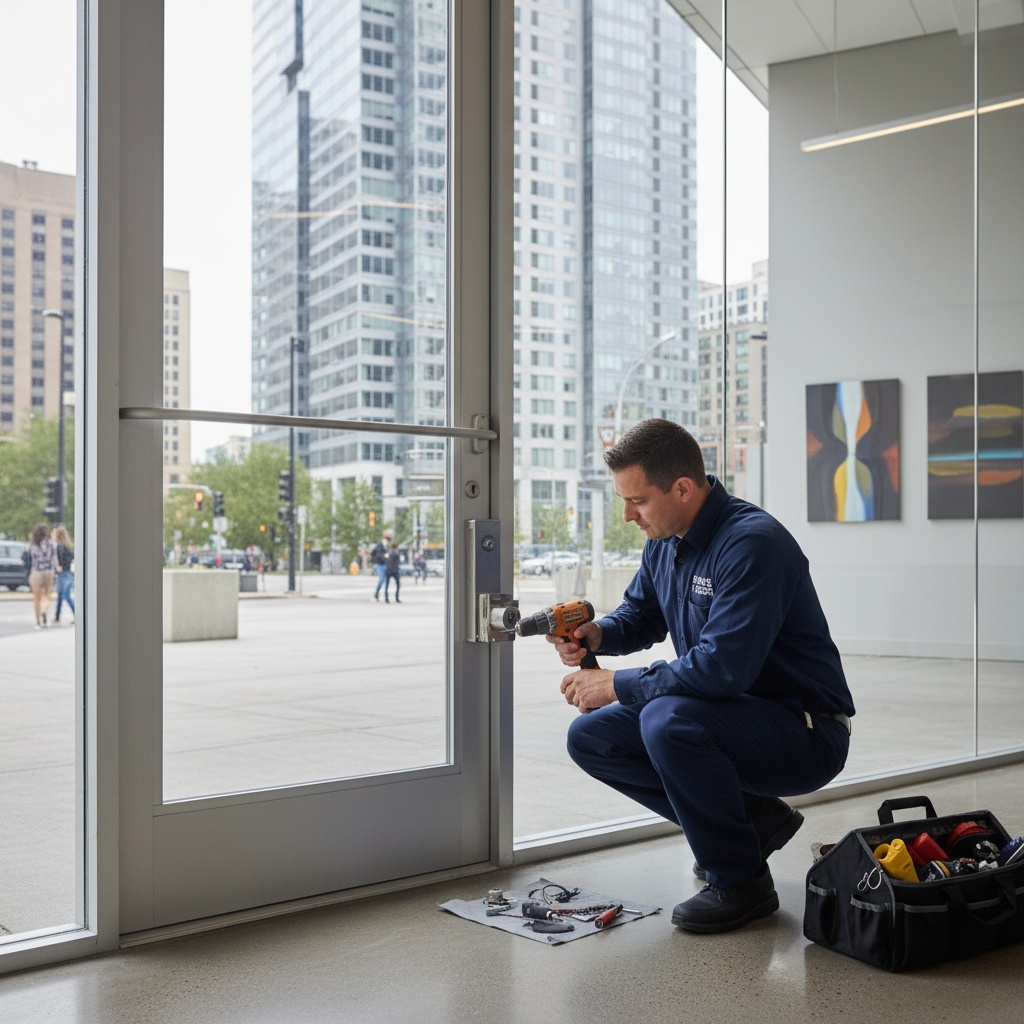
A standard pin tumbler cylinder contains a set of spring-loaded pins of different lengths. When the correct key is inserted, the pins align at the shear line and the cylinder turns. Rekeying involves removing the cylinder, extracting the old pins, and installing a new set of pins matched to a different key. The cylinder and the housing remain the same. The entire procedure for a single cylinder takes a skilled technician only a few minutes.
In a commercial setting the work can be more involved. Multiple cylinders may be keyed alike, meaning they all use the same key. Others may be part of a master key system where each lock has its own change key but a single master key opens them all. The locksmith needs to know the existing pinning scheme and the desired new scheme before starting. That is why a site survey or a review of the current keying records is often the first step.
What changes and what stays the same
Rekeying does not alter the lock body, the faceplate, the strike plate, or the door itself. The finish and the hardware remain. What changes is the internal pin stack and the key that fits it. The old keys become useless. The new keys are cut to match the new pin combination. If the business uses a restricted keyway - where blank keys are only available to authorised holders - the replacement keys can be ordered through the same system, preserving that security feature.

Scenarios that call for commercial rekeying
The most common trigger is staff turnover. When an employee leaves on good terms, keys are often returned, but there is no guarantee that copies were not made. Rekeying gives certainty. The same logic applies after a termination where keys are not handed back or after a dispute. Even when trust is not an issue, keys that have been out of your control for any period represent a risk.
A security incident is another clear reason. A burglary where the intruder had a key, a break-in that did not involve forced entry, or a lost master key all mean the current keying system is compromised. Rekeying restores the integrity of the locks. If the incident involved a specific area such as a server room or a storage cage, you may only need to rekey the cylinders for that zone.
Less obvious situations include a tenant moving out of a shared commercial building, a contractor finishing a project, or a cleaning crew that changes providers. Any scenario where keys pass through multiple hands is a candidate for rekeying. Some businesses schedule rekeying at regular intervals as a preventive measure, though that is less common than event-driven work.
The role of a master key system in rekeying
A master key system adds complexity but also flexibility. In such a system each lock has its own change key, and a master key opens every lock in the group. When you rekey a single lock in a master key system, you must maintain the pin stack that allows the master key to still work. That requires careful calculation of pin lengths. A mistake can leave the master key unable to turn that lock or, worse, allow a change key to operate a lock it should not.
Because of that, rekeying a master key system is best left to someone who understands the pinning math and has the tools to cut new keys on site. A commercial locksmith Edmonton who works with commercial key systems regularly can rekey a single cylinder or the entire building while preserving the master key hierarchy. The same technician can also provide a new master key if the old one was lost or stolen.
What to do before the locksmith arrives
Preparation makes the rekeying go faster and reduces the chance of errors. Start by identifying every lock that uses the same keyway. Walk through the building and note the location of each cylinder that needs rekeying. If you have a master key system, list which doors are on which change key. Gather any existing keying records or a pinning chart if one was kept. If the system was installed by a previous business or a different locksmith, the records may not exist. In that case the technician will need to pull each cylinder and decode it, which takes more time.
Also decide who will receive the new keys. Ordering extra blanks ahead of time can save a second trip. For larger buildings a key cabinet with a signing log helps track who has which key. That is not part of rekeying itself, but it is a natural moment to set up better key control going forward.
What rekeying does not address
Rekeying changes the key that operates a lock, but it does not improve the physical strength of the lock or the security of the door frame. A lock that is worn, damaged, or easy to pick will remain that way after rekeying. If the incident that triggered the rekey involved forced entry or an attempted break-in, the hardware should be inspected. A bent faceplate, a cracked cylinder housing, or a loose strike plate all reduce security. In those cases replacing the lock entirely may be the better choice.
Electronic access control systems are a different category. A system that uses key cards, fobs, or biometrics does not have pins to rekey. Instead, credentials are deactivated in the software. If your building uses a mix of mechanical locks and electronic access, rekeying only applies to the mechanical portion. For businesses that are considering upgrading, this is a good time to evaluate whether the mechanical locks can eventually be phased out or supplemented with electronic readers.
Cost and time considerations
Rekeying is generally faster and less expensive than replacing locks, especially when multiple cylinders are involved. The exact cost depends on the number of cylinders, the type of key system, and whether the locksmith needs to travel to the site. A single cylinder rekey can be done in a few minutes. A whole building with a master key system may take half a day or more. Because the hardware stays in place, there is no need to match finishes or drill new holes, which keeps the job clean.
Business owners should also factor in the cost of new keys and blanks. Restricted key blanks cost more than standard ones but provide better control because they cannot be duplicated at a retail kiosk. If the business uses a restricted keyway, the rekeying must be done by a locksmith who is authorised to supply those blanks.
Keeping records after the rekey
Once the work is done, ask for a pinning chart or a record of the new key combinations. Store it in a secure place, separate from the keys themselves. This record is essential if you need to rekey again later, add locks to the system, or order additional keys. Without it, the next locksmith will have to disassemble every cylinder to figure out the pinning, which adds labour and cost.

A simple spreadsheet with the door location, cylinder type, key ID, and pinning code is sufficient. Some businesses keep this information in a locked drawer or a password-protected file. The goal is to have it available when needed but not accessible to anyone who should not have it.
Final thoughts
Commercial rekeying is a practical response to a common problem: keys that should no longer work. It restores control over who can enter the building or specific rooms without the hassle of replacing hardware. By understanding what rekeying involves and preparing properly, business owners can handle staff turnover and security incidents with minimal disruption. The key is to act quickly, keep good records, and work with someone who understands commercial systems. A small investment in rekeying today can prevent a much larger problem tomorrow.